01-21-2026
Reading time: 3 min
When we tear open a delivery package, what we smell isn’t just anticipation. It may also carry unseen health risks.
01-21-2026
Reading time: 3 min

Have you ever noticed that “new packaging” smell?
It’s not just the scent of fresh printing. It’s a signal that chemicals are evaporating into the air. The moment we open a new product, we may be breathing in risks we can’t see.
At RHINOSHIELD, “protection” shouldn’t stop at the product itself. That’s why we decided to re-examine a detail often overlooked: the ink used in product packaging. Protecting your phone also means protecting every breath you take when unboxing it.
So we began asking: where does this familiar smell actually come from?
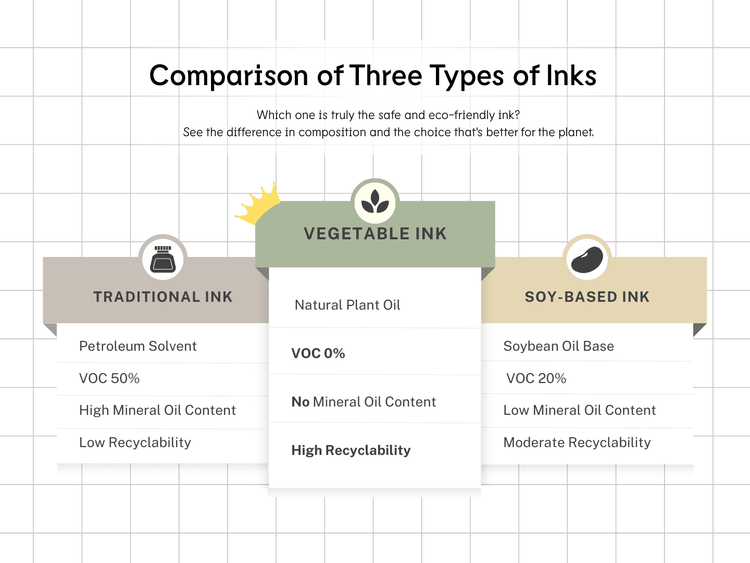
Vegetable-based ink has long been used in food packaging, cosmetics, book printing, baby products, and premium brand packaging. By replacing mineral oil with plant oils, it reduces VOC emissions and lowers the impact on both people and the environment. It’s gradually becoming a new global standard in printing.
After learning more about this material, RHINOSHIELD began adopting 100% plant-based vegetable ink for all B2C and most B2B packaging, starting with the iPhone 15 series. A sustainable choice once limited to a few industries is now part of every detail in our packaging.
- MOF (Mineral Oil Free) certified
- Zero-VOC formulas
- Fully recyclable and non-polluting
You may not see the change with your eyes, but you’ll notice something missing during unboxing — that sharp chemical smell. Every safer touch comes from our commitment to protecting you completely.
In the packaging you handle every day, volatile organic compounds (VOCs) released from printing inks can become a source of indoor air pollution and health concerns. These gases can irritate the respiratory system, affect cardiovascular health, and even trigger headaches or allergies.
According to the American Lung Association, some VOCs are toxic, and long-term exposure may impact the nervous system and organ health.
Beyond VOCs, another risk is mineral oil hydrocarbons (MOH), commonly found in traditional inks. They make colors richer and printing smoother, but at a cost:
- MOAH (aromatic hydrocarbons): some may pose carcinogenic or genotoxic risks
- MOSH (saturated hydrocarbons): can accumulate in body fat and the liver
- Heat & time: accelerate the migration of mineral oils into food or the environment
- Recycled paper: printed cardboard can release mineral oils again, creating circular pollution
According to the European Food Safety Authority (EFSA), MOH is one of the most concerning chemical risks in food packaging.
Choosing vegetable ink is only the first step. Behind the scenes, RHINOSHIELD continues to push forward:
- Supplier collaboration: working closely with printing partners to ensure consistent quality
- Ink recycling: supporting professional recovery systems to properly handle ink waste
- Technical improvement: researching printing solutions that are even more sustainable and high-performing
Protection has always been RHINOSHIELD’s core value — protecting your phone, your health, your daily life, and the planet we share.
From material selection to printing ink, every detail reflects our promise.
Because true peace of mind comes not only from what you hold, but from knowing what’s behind it is something you can fully trust.


Product Design
Reading time: 5 min
Product Design
Reading time: 8 min

Plastic Management
Reading time: 5 min